2026-11-15 · 5 min read · Crivitz
Day in the Life of a Realtor: When You Do Everything Right and Things Still Go Wrong
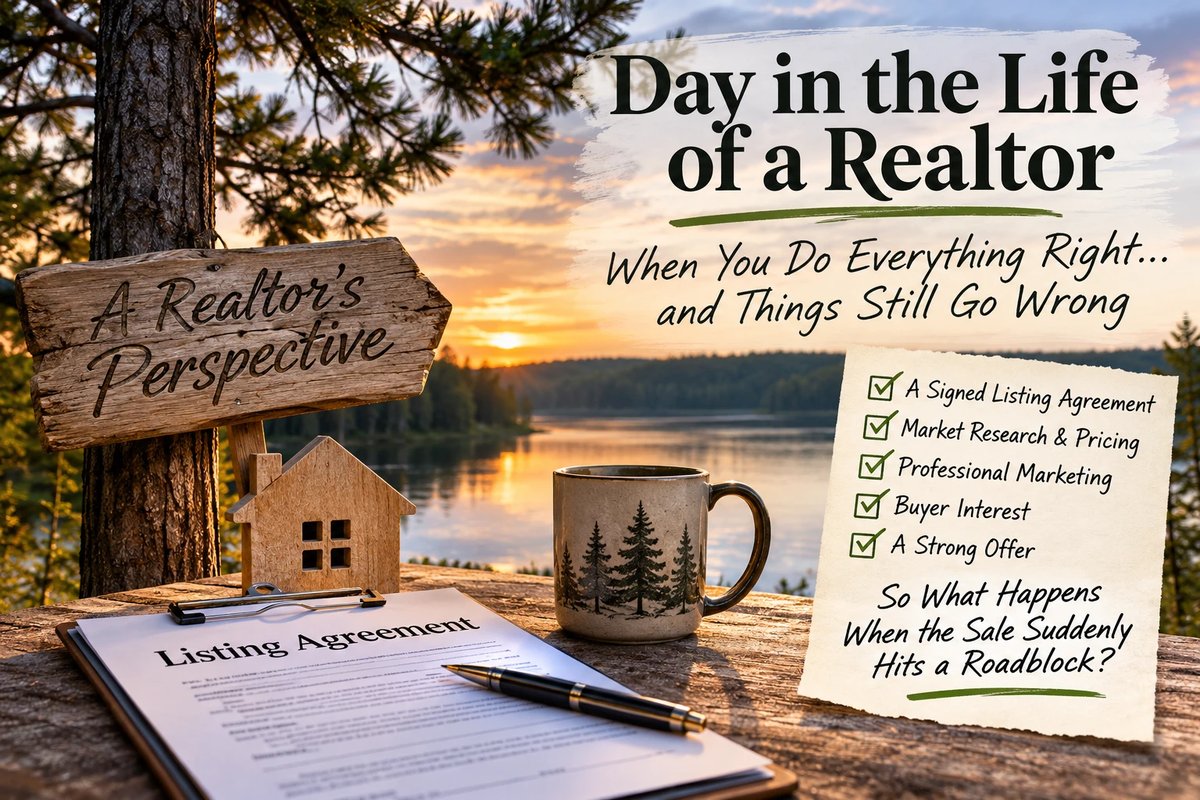
Behind every listing is more than a sign in the yard
There is a commitment, a contract and a professional reputation on the line.
Some days in real estate truly test your patience, your professionalism, and your belief that everyone understands what signing a contract actually means. At Venture North Real Estate Co, working with sellers near Crivitz and across the Northwoods, I want to talk about something that does not get discussed enough: the responsibilities of a seller after signing a listing agreement.
When the Realtor does everything right
Imagine hiring a Realtor to sell your property. You sign a legally binding listing agreement. Your Realtor researches the market, helps establish a competitive price, invests in marketing, promotes the property, communicates with potential buyers, and works diligently to generate interest.
And then it happens. Your Realtor delivers exactly what you hired them to do: a qualified buyer with an excellent offer and favorable terms. Sounds like a success story, right?
But what happens when the seller suddenly reveals information that should have been disclosed before the property was ever listed? Perhaps there is a previous agreement, a restriction on the sale, or another obligation that could prevent the transaction from moving forward.
Wait. What?
The Realtor has done the work. The buyers are ready. Everyone has invested time and effort. And now the entire transaction is in jeopardy because of information that was not shared from the beginning.
A listing agreement is not just a piece of paper
When you sign a listing agreement, you are entering into a legally binding contract. That agreement establishes responsibilities for both the seller and the brokerage.
Realtors do not typically get paid by the hour. We invest our time, resources, marketing dollars, knowledge and professional relationships into helping our clients achieve their goals. We take that responsibility seriously. And when a Realtor fulfills the requirements of a listing agreement, the brokerage's contractual rights, including compensation when earned under the agreement, deserve to be respected.
A listing agreement is a commitment, not simply permission to test the market.
If there are existing agreements, restrictions, rights of first refusal, or other circumstances that could affect your ability to sell, those matters need to be disclosed and addressed before your property is marketed.
It's not just about a commission. It's about my reputation.
I have worked hard to build a real estate company based on honesty, integrity, professionalism, and doing what I say I am going to do. When I put my name and my company's name on a listing, I am putting my professional reputation behind that property.
Buyers trust me. Other agents work with me. My clients count on me to represent their interests and follow through on my commitments.
When a transaction runs into problems because of information that was not disclosed, it affects far more than the seller. It affects buyers who may have become excited about a property. It affects agents who have invested their time and resources. It affects the credibility of the transaction. And it can put the Realtor in the uncomfortable position of explaining circumstances they were never made aware of.
My reputation is something I have spent years building, and I do not take that lightly.
I can handle difficult negotiations. I can handle inspections, financing challenges, and transactions that fall apart for legitimate reasons. That is part of real estate. But even the most experienced Realtor cannot prevent every problem when important information is withheld.
Accountability goes both ways
As Realtors, we are expected to be professional, knowledgeable, ethical, responsive and accountable. And we absolutely should be. But accountability does not stop with the Realtor. Sellers have responsibilities, too.
When you hire a professional to represent your property, be upfront about your circumstances. Disclose existing agreements. Ask questions before signing contracts. Understand your obligations. And most importantly, communicate when an issue arises.
Ignoring phone calls, avoiding difficult conversations, or hoping a problem will simply disappear does not resolve anything. Open communication and mutual respect are essential to a successful real estate transaction.
My job is not to test the market
My job is to market and sell real estate. When someone hires me, I take that responsibility seriously. I work to position their property competitively, attract qualified buyers, negotiate favorable terms, and help guide the transaction toward a successful closing. That is what my clients hire me to do.
And when I deliver on that commitment, I believe it is reasonable to expect honesty, cooperation and accountability in return.
A Realtor's time has value. Their expertise has value. And their reputation has value.
If you are thinking about selling, start with selling your home to see how I work with sellers from the first conversation.
My final thought
Real estate is about more than properties, prices and contracts. It is about people. It is about trust. It is about keeping your word.
Not every transaction will close. Not every negotiation will succeed. And sometimes unexpected circumstances arise. But there is a difference between an unforeseen complication and a problem that could have been avoided through honest communication from the beginning.
If you are going to hire a Realtor, be prepared to work together toward the same goal. Because behind every listing is a professional investing their time, money, expertise and reputation into getting the job done.
Contracts matter. Communication matters. Honesty matters. And reputations matter.
Just another day in the life of a Northwoods Realtor. If you are selling in Crivitz and Surrounding Areas and want to talk through what to expect, get in touch.
General information only, not legal advice. Your rights and obligations depend on the terms of your own agreement. Consult an attorney about your specific situation.